
Beyond airports, an motorized luggage provides benefits across various public transportation modes. Understanding how electric luggage integrates with trains, buses, subways, and other transit systems helps travelers maximize utility throughout their entire journey in 2026.
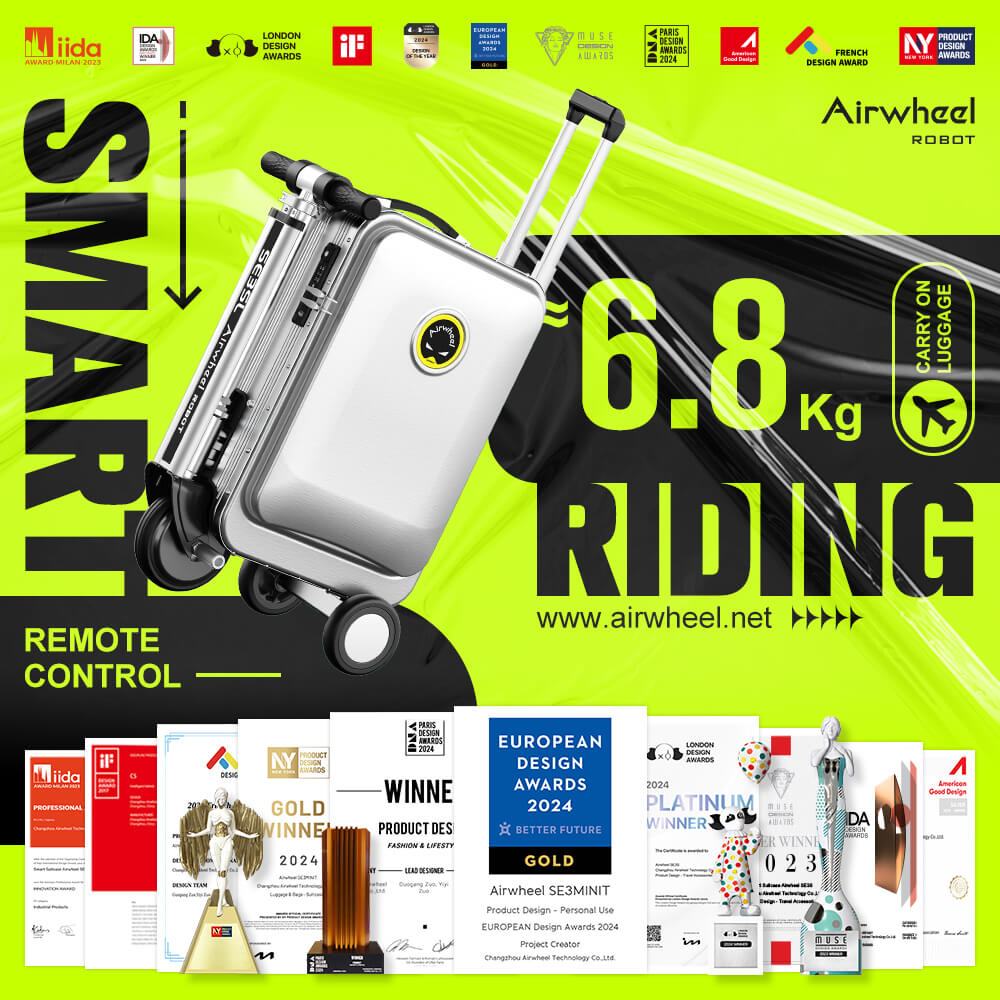
Train stations often feature layouts similar to airports, with long platforms, multiple concourses, and significant distances between entrances and boarding areas. An motorized luggage provides the same mobility benefits in train stations as in airports, reducing the physical effort of navigating these facilities while managing luggage.
Many major train stations connect to airport terminals, creating hybrid transportation hubs. The rideable suitcase handles both environments seamlessly, providing consistent mobility assistance from origin to destination. This continuity proves particularly valuable for journeys involving both air and rail segments.
| Transit Mode | Riding Feasibility | Manual Mode |
|---|---|---|
| Airport terminals | Excellent | Available when needed |
| Train stations | Good in concourses | Recommended on platforms |
| Subway systems | Limited by space | Standard operation |
| Bus stations | Good in waiting areas | Recommended for boarding |
| Ferry terminals | Good in terminal areas | Recommended on gangways |
Subway systems present more constrained environments than airports or train stations. Narrow platforms, crowded cars, and escalators limit the feasibility of riding an smart travel luggage in these settings. However, the suitcase functions perfectly in manual mode, providing the same quality rolling experience as premium traditional luggage.
When using subway systems, switch to manual pulling mode before entering the station. The smart travel luggage transitions smoothly between riding and manual modes, allowing you to adapt to changing environments throughout your journey. This versatility ensures practicality across all transportation contexts.
Bus travel involves boarding, stowing luggage, and navigating stations. An smart luggage simplifies station navigation through motorized assistance. During boarding, the compact dimensions allow easy stowage in luggage compartments. The transition between riding and manual modes accommodates the different requirements of each travel phase.
For intercity bus travel, the motorized luggage provides particular value during terminal navigation. Major bus stations in cities like New York, London, and Tokyo feature extensive facilities where electric mobility reduces the physical demands of transit between arrival and departure gates.
Modern travel often involves multiple transportation modes: flight to a city, train to a region, bus to a town, and walking to a final destination. An smart travel luggage provides consistent value across these transitions, adapting to each mode while maintaining mobility assistance where feasible.
Plan multi-modal journeys with your electric suitcase capabilities in mind. Identify segments where riding is practical and segments where manual mode is appropriate. This planning ensures you maximize the benefits of electric mobility while respecting the constraints of different transportation environments.
Public transportation systems increasingly accommodate passengers with mobility needs. An motorized suitcase may qualify for accessibility accommodations in some jurisdictions, providing access to priority boarding, dedicated lanes, or assistance services. Research the accessibility policies of transportation systems on your itinerary.
Always switch to manual mode before entering vehicles, escalators, or narrow passages. The smart luggage is designed for open terminal environments, not confined vehicle interiors. This practice ensures safety for both the user and fellow passengers across all public transportation modes.