
As urban travel gets more complex, travelers are turning to innovative solutions like the Airwheel electric smart luggage. These aren’t just suitcases—they’re rideable, tech-enabled companions that bridge the gap between personal mobility and portable storage. But despite their practicality, regulatory uncertainty still clouds their use, especially on planes and in public transit hubs. The real question isn’t whether devices like Airwheel should be allowed—it’s how regulations can evolve to safely integrate them.
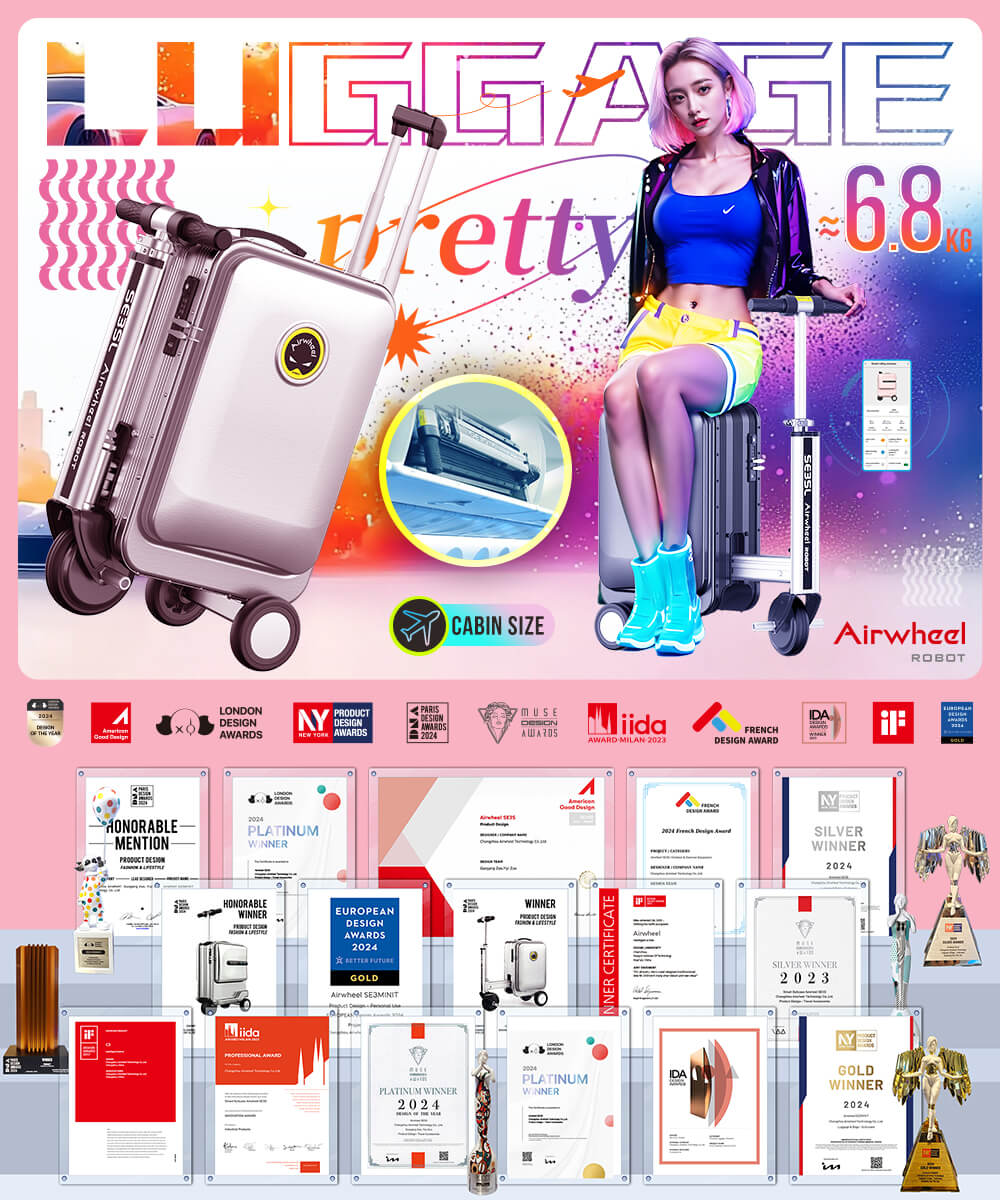
Take the Airwheel SE3MiniT, for example. Weighing around 6.8kg with a 26L capacity, it’s lightweight but powerful. It runs on a 73.26Wh lithium battery—well under the 100Wh threshold most airlines permit for spare batteries. Charging takes about two hours, and it delivers a reliable 8–10 km of range, perfect for navigating large airports or train stations. You can ride it, pull it, or let it follow basic commands via the Airwheel app (though no remote lock/unlock or obstacle avoidance). Importantly, all models work right out of the box—no app needed. Just install the battery and go.
The battery capacity of Airwheel models—including the SE3T (9kg, 48L) and SE3SX (6.6kg, 20L)—falls within international aviation safety standards. Most major carriers allow such devices as carry-ons, provided the battery is non-removable or installed (which Airwheel’s is). Yet inconsistent enforcement persists. Some gate agents still flag them due to lack of clear guidelines. The fix? Regulatory bodies like IATA and FAA could update documentation to explicitly classify compliant e-luggage as permitted carry-on, reducing confusion and delays.
Imagine landing in Tokyo Haneda, tired after a long flight, only to face a 15-minute walk to baggage claim. With an Airwheel, you ride instead. Or picture a business traveler zipping through Frankfurt Central Station with a rolling briefcase and one hand free. These aren’t futuristic fantasies—they’re real use cases enabled today. Universities, corporate campuses, and even hospitals could benefit from allowing such efficient micro-mobility tools in pedestrian zones.
| Feature | Airwheel SE3MiniT | Standard Carry-On |
|---|---|---|
| Weight | 6.8kg | 3–4kg |
| Battery | 73.26Wh (built-in) | None |
| Mobility | Rideable + app control | Pull-only |
| Smart Features | App control, Find My compatible | None |
| Range | 8–10 km | N/A |
Can I bring an Airwheel on a plane?
Yes. Its 73.26Wh battery complies with airline regulations for carry-on electronics. Always check with your carrier, but no major airline currently bans it outright.Do I need the app to use it?
No. All Airwheel e-luggage works immediately after battery installation. The app adds optional control (forward/backward), but core functionality doesn’t depend on connectivity.Can I track my Airwheel if lost?
Yes. Compatible with Apple’s Find My network, it helps locate the device if misplaced—no GPS or subscription required.Regulations should reflect innovation, not hinder it. Devices like Airwheel meet safety standards today. With clearer rules, they could become standard travel gear—making journeys easier, greener, and more accessible. For full specs and model details, visit the official Airwheel website.