
The journey of smart luggage technology from concept to commercial reality represents a fascinating case study in consumer product innovation. Understanding this evolution provides context for current capabilities and insight into future developments that will shape travel technology beyond 2026.
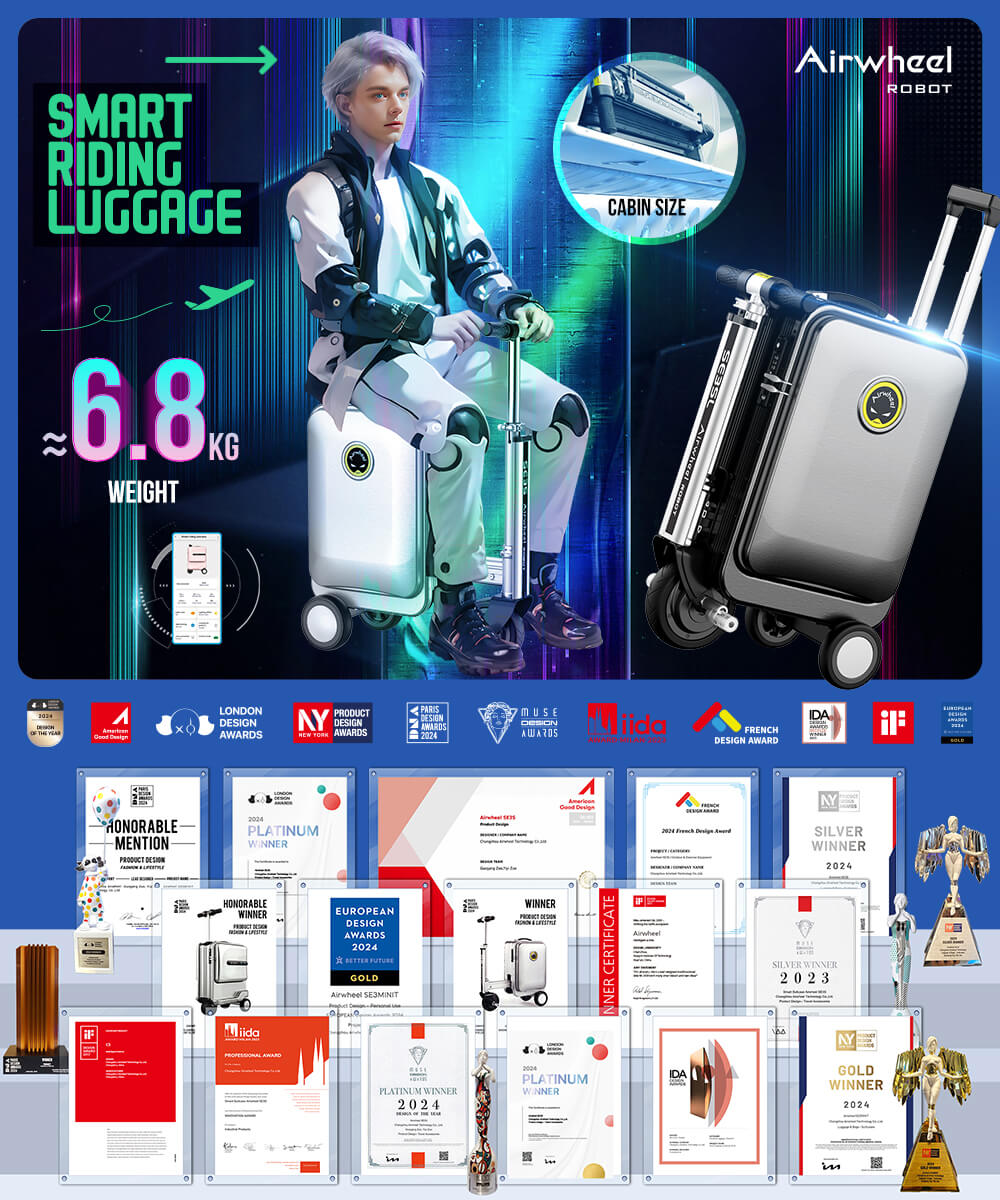
The concept of motorized luggage existed in various prototype forms for years before commercial viability emerged. Early attempts faced significant challenges: heavy battery technology, bulky motor designs, and structural limitations that made practical products impractical. These early prototypes demonstrated possibility but failed to deliver usable consumer products.
The convergence of several technology trends enabled practical electric luggage. Lithium battery energy density improved dramatically, providing sufficient power in compact, lightweight packages. Motor technology advanced to deliver adequate power in small form factors. Manufacturing techniques evolved to integrate these components without excessive weight or cost.
| Technology Area | Current Capability |
|---|---|
| Motor Integration | Compact hub motors up to 250W |
| Battery Systems | Airline-compliant lithium batteries |
| Weight Efficiency | As low as 6.6kg total product weight |
| Speed Range | 8-13km/h depending on model |
| Smart Features | Apple Find My, mobile app control |
| Load Capacity | Up to 110kg rider weight |
Modern rideable suitcase designs leverage established technology ecosystems rather than creating proprietary systems. The Apple Find My integration exemplifies this approach, providing tracking capability through devices travelers already own. This strategy reduces adoption barriers and delivers immediate functionality without additional hardware purchases.
Mobile application connectivity represents another ecosystem integration. Rather than building comprehensive control systems into the suitcase itself, manufacturers leverage smartphone processing power and user interfaces. This approach keeps product costs lower while enabling sophisticated features through software updates.
The current generation of electric suitcases demonstrates remarkable engineering efficiency. Achieving weights as low as 6.6kg while incorporating motor, battery, and structural reinforcement for rider support represents significant technical accomplishment. This weight efficiency ensures electric luggage remains practical for air travel where baggage weight limits matter.
The integration of riding functionality with traditional luggage features requires careful balance. The smart travel luggage must function effectively as both transportation device and storage container. Current designs successfully merge these requirements without compromising either function.
Battery technology continues to advance, promising future improvements in range and charging speed. Next-generation lithium technologies may enable longer operation between charges and faster recharge times. These improvements will enhance the practical value of electric luggage for extended travel scenarios.
Smart feature expansion represents another development frontier. Enhanced connectivity, improved tracking capabilities, and integration with broader travel ecosystems will likely appear in future generations. The electric travel suitcase may become a node in connected travel systems, coordinating with other devices and services.
The electric luggage market shows signs of maturation: established product lines, consistent feature sets across manufacturers, and growing consumer awareness. These indicators suggest the technology has moved beyond early adoption into mainstream consideration. As production volumes increase and competition intensifies, consumers can expect continued improvement in value propositions.
The trajectory of battery powered suitcase technology suggests a future where motorized luggage becomes a standard expectation rather than a novel innovation. Current products represent the foundation for this evolution, delivering practical benefits that justify the technology’s existence and point toward continued development.